Start with the job the light performs
“Computing with light” can describe several different ideas. An optical link can move information between electronic components. Other photonic devices can manipulate optical signals. Neither statement, by itself, means that every part of a computer has become optical.
Silicon photonics brings optical structures into a semiconductor platform. The useful starting question is specific: does this device transmit information, detect it, alter it, or perform a particular computation?
Follow a simple optical link
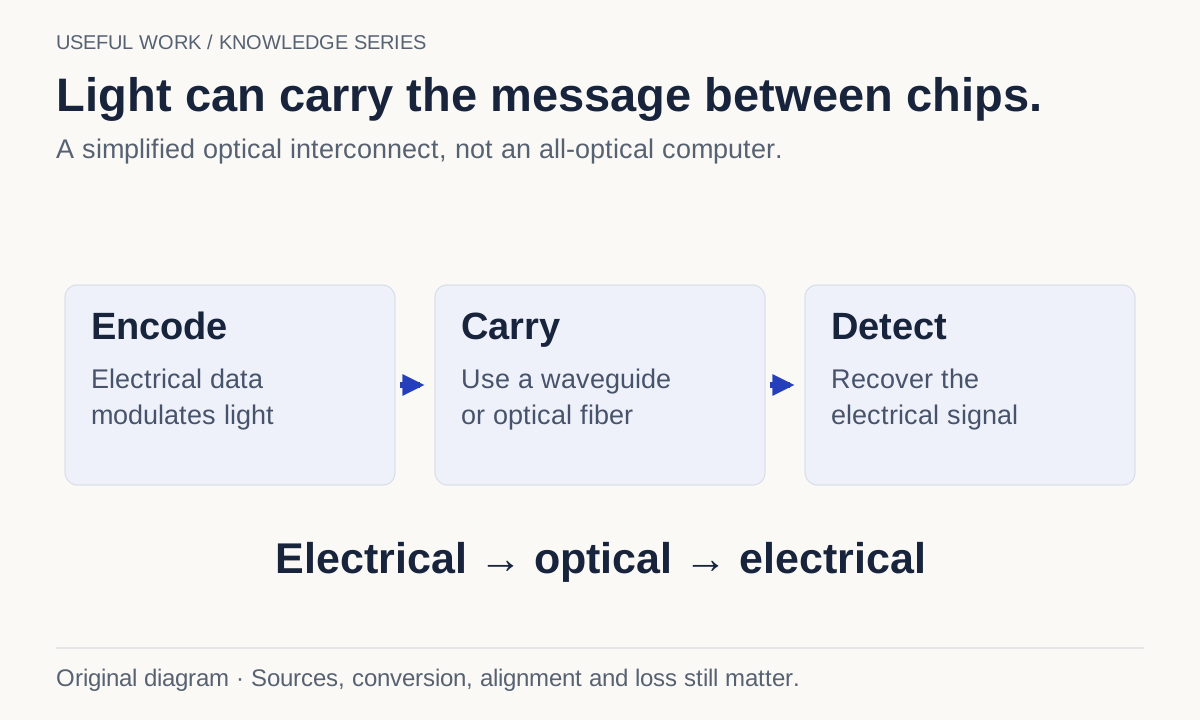
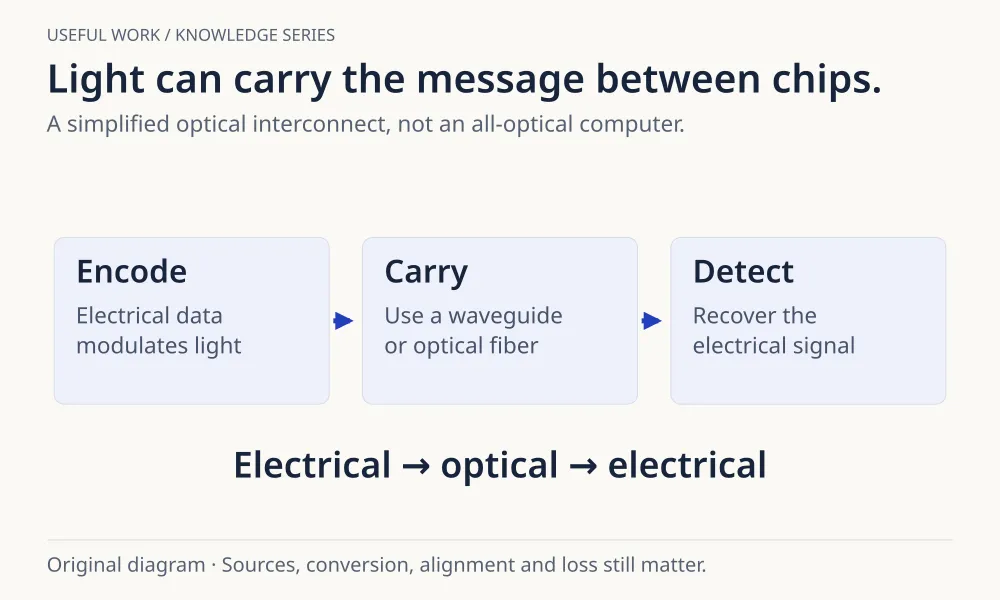
A light source supplies the optical signal. A modulator changes a property of that light in a way that represents information. A waveguide confines and directs light on a chip, while an optical fiber can carry it between locations. A detector converts arriving light into an electrical response.
Intel’s 2010 technical white paper is a historical example of this transmitter-to-receiver architecture. It is useful for understanding the building blocks, not for treating an old demonstration as a specification for a current product. IBM’s component research illustrates that modulation and detection are concrete device functions, not just names for a vague faster chip.
Work through an everyday analogy
Imagine sending a message between two offices. You need a way to encode the message, a route to carry it, and a receiver that can interpret it. Changing the route does not eliminate the work of composing or reading the message.
An optical interconnect has a similar boundary. If electronic systems are producing and consuming the data, the conversions and interfaces remain part of the design. A claim about the optical channel should not quietly become a claim about the whole computer.
Look beyond a headline speed
A useful comparison needs a defined task and a system boundary. Ask whether a reported figure covers a component, a complete link, or an application. Ask which supporting electronics, light sources and conversions are included in an energy measurement.
Alignment, coupling, fabrication and packaging also affect whether a device can be built and used reliably. A laboratory demonstration can be significant even when those integration questions remain open. Keeping the boundary clear makes progress easier to evaluate.
Materials can change the form, too
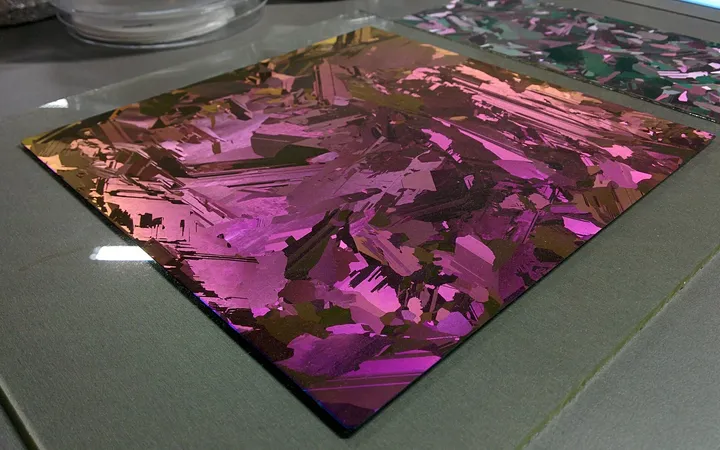
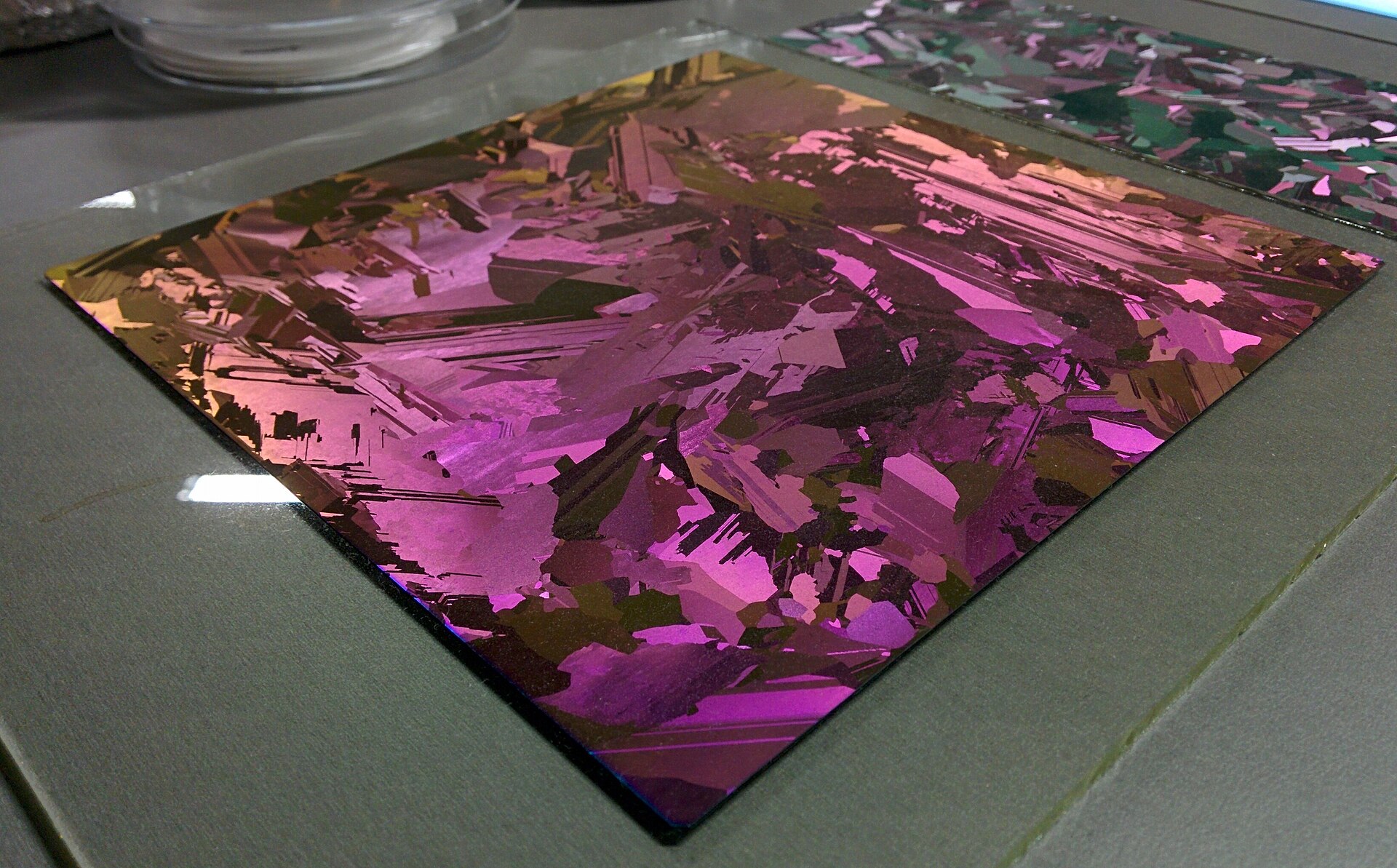
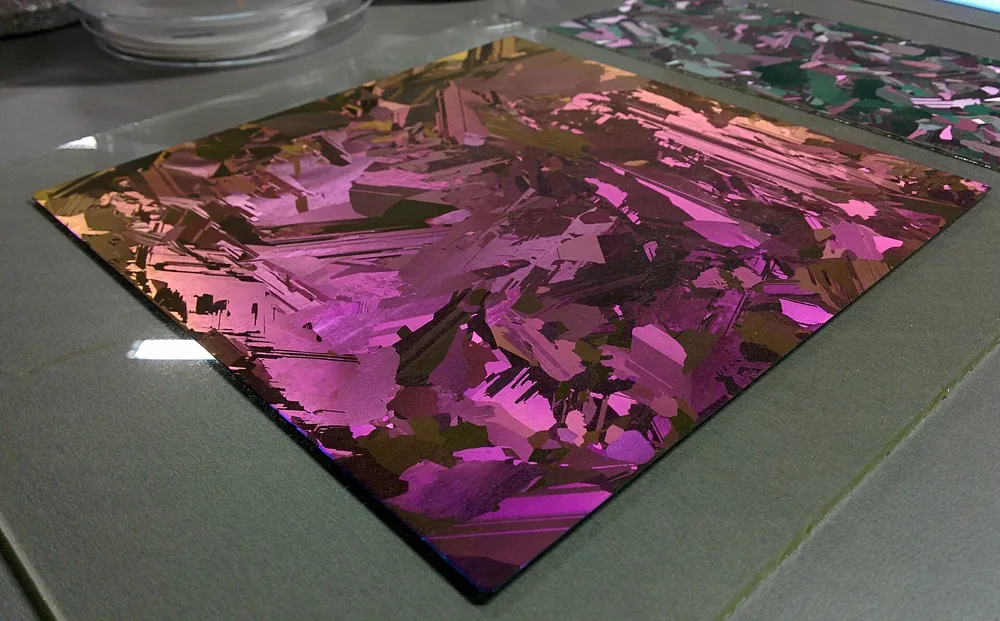
The flexible photonic-chip story addresses another dimension: what shape an optical component can take. Flexibility and transparency could open different physical arrangements, but they do not automatically prove a faster processor or a finished display.
When reading the next photonics announcement, identify the function, inspect the measurement conditions and locate the interfaces. Those three steps connect a striking device image to the actual engineering idea behind it.
See the simple overview
Keep the evidence in view.
The diagram is a conceptual link. Historical component demonstrations do not establish the speed, energy use or availability of every modern photonic system.
Technical sources checked: . Our source check: . This is an AI-assisted editorial explanation, not an independently reproduced experiment.
Sources & further reading
- Intel Labs, July 2010 technical white paperThe 50G Silicon Photonics Link
- MIT NewsFabrication platform could enable flexible, transparent photonic chips
- IBM Research, ECOC 2012Compact InP-on-SOI microdisks used as high-speed modulators and photo detectors