What changed
MIT engineers reported a thin swimming robot built from a gel structure and layers of living muscle cells. The cells respond to light, allowing the researchers to make the two sides flap and steer the device through a simple watery maze.
The work explores a biohybrid design: engineered structure combined with biological actuation. Movement comes from the muscle layers rather than a conventional electric motor.
Who supplies the steering?
In the reported maze experiment, a researcher moved an external light source. Illuminating a fin stimulated the muscle on that side. The experiment therefore demonstrates controllable movement, while the person and light source remain part of the control loop.
That distinction changes how to read the video: following an externally supplied stimulus is a different engineering result from choosing a route using onboard perception.
What the illustration shows
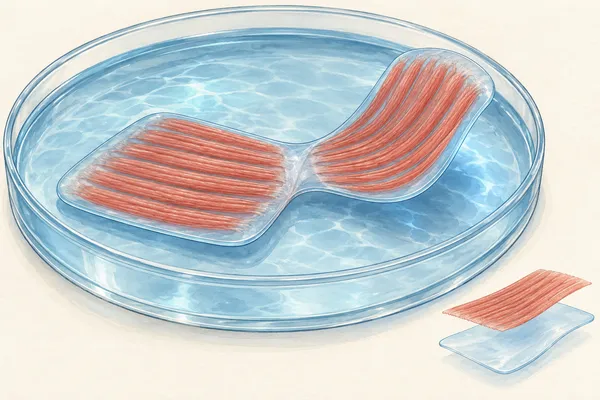
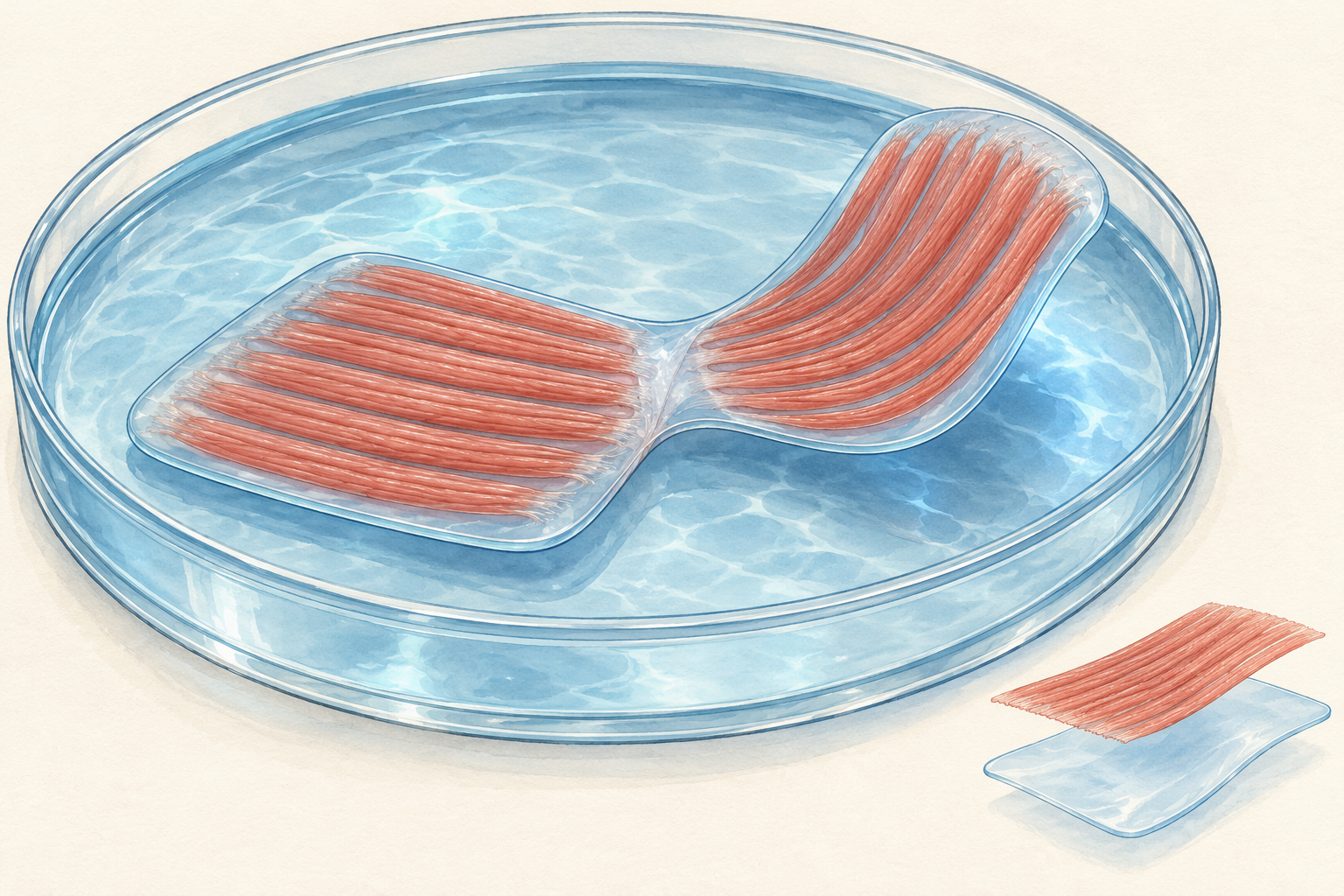
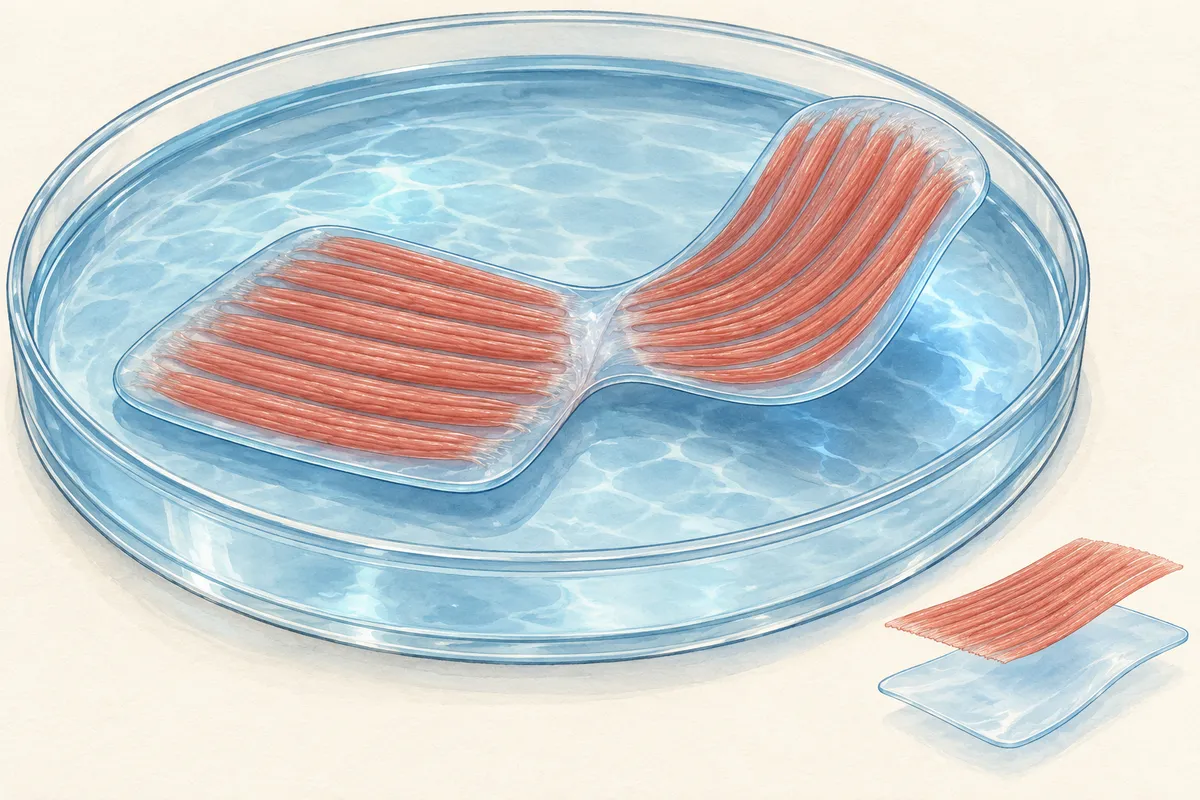
Our original illustration separates a coral muscle layer from a blue flexible support so the combination is easier to understand. It is conceptual and not to scale. It does not reproduce the experiment’s exact geometry or depict measured motion. The MIT report includes the actual research photographs and demonstration video.
Why it matters
Our reading is that the interesting idea is not to replace every robot motor with muscle. It is to ask which combinations of material, movement and environment suit a particular task.
Softness and responsiveness may be attractive design properties. They do not eliminate the need to provide control, support the living tissue and define where the device can operate.
What to watch next
The report describes a basic body design and future work on swimming performance. Look for progress on repeatability, control and operation beyond a laboratory setup. Possible applications remain research directions, rather than capabilities established by this demonstration.
Understand the idea underneath
Read our illustrated explainer on how living muscle and a mechanical structure work together. It connects this research story to the underlying mechanism, examples and questions to ask next.
Keep the evidence in view.
The reported swimmer was a laboratory demonstration controlled with light, not an autonomous field robot or a medical treatment.
Source announcement: . Our source check: . This is an AI-assisted editorial briefing, not an independently reproduced experiment.